
How Much Does an Inground Pool Cost in Michigan?
One national cost guide puts a concrete pool, gunite or shotcrete, at $50,000 to $90,000 installed. It puts the national average at $60,000. Decking, a barrier fence, a heater and permits sit on top of that number.
These are market numbers, not our price list. Our inground pool installation work uses a gunite or shotcrete shell, so this post prices that type first. Vinyl liner and fiberglass pools appear for comparison.
What does a gunite pool cost in Michigan?
Guides disagree, so it pays to read more than one. One guide updated in February 2026 puts most concrete pools at $35,145 to $62,500. Another, updated in June 2025, prices a 12 by 24 foot concrete pool at $58,000 to $100,000. That second guide breaks the price out by pool type.
| Pool type | Per square foot of pool | A 12 by 24 foot pool |
|---|---|---|
| Gunite or shotcrete | $200 to $350 | $58,000 to $100,000 |
| Fiberglass | $175 to $330 | $50,000 to $95,000 |
| Vinyl liner | $130 to $240 | $38,000 to $70,000 |
For a Michigan figure, one national guide’s Detroit page puts the average pool project at $37,166. It gives a range of $33,000 to $58,000. That average is not specific to concrete, and the same page lists concrete pools at $65,000 to $120,000. Another guide says owners in northern states pay around 20 percent more than owners in southern states.
What else goes into the total?
The pool is only part of the bill. Guides price the extras as separate lines.
| Extra | Published market range |
|---|---|
| Pool deck | $5,000 to $20,000 |
| Barrier fence | $3,000 to $10,000 |
| Gas or electric heater, installed | $3,450 to $5,450 |
| Pump | $700 to $1,300 |
| Filter | $500 to $2,000 |
| Pool lights | $450 to $1,200 |
| Permits | $450 to $1,800 |
Those figures come from two national cost guides updated in 2025. The deck is the widest swing, and guides tie it to the deck’s size and material.
We build pool decks in concrete or pavers, and stamped concrete adds pattern and color. Each deck is pitched so water drains away from the pool. The deck can also tie into patios and outdoor kitchens built in the same project.
What drives the cost of the dig?
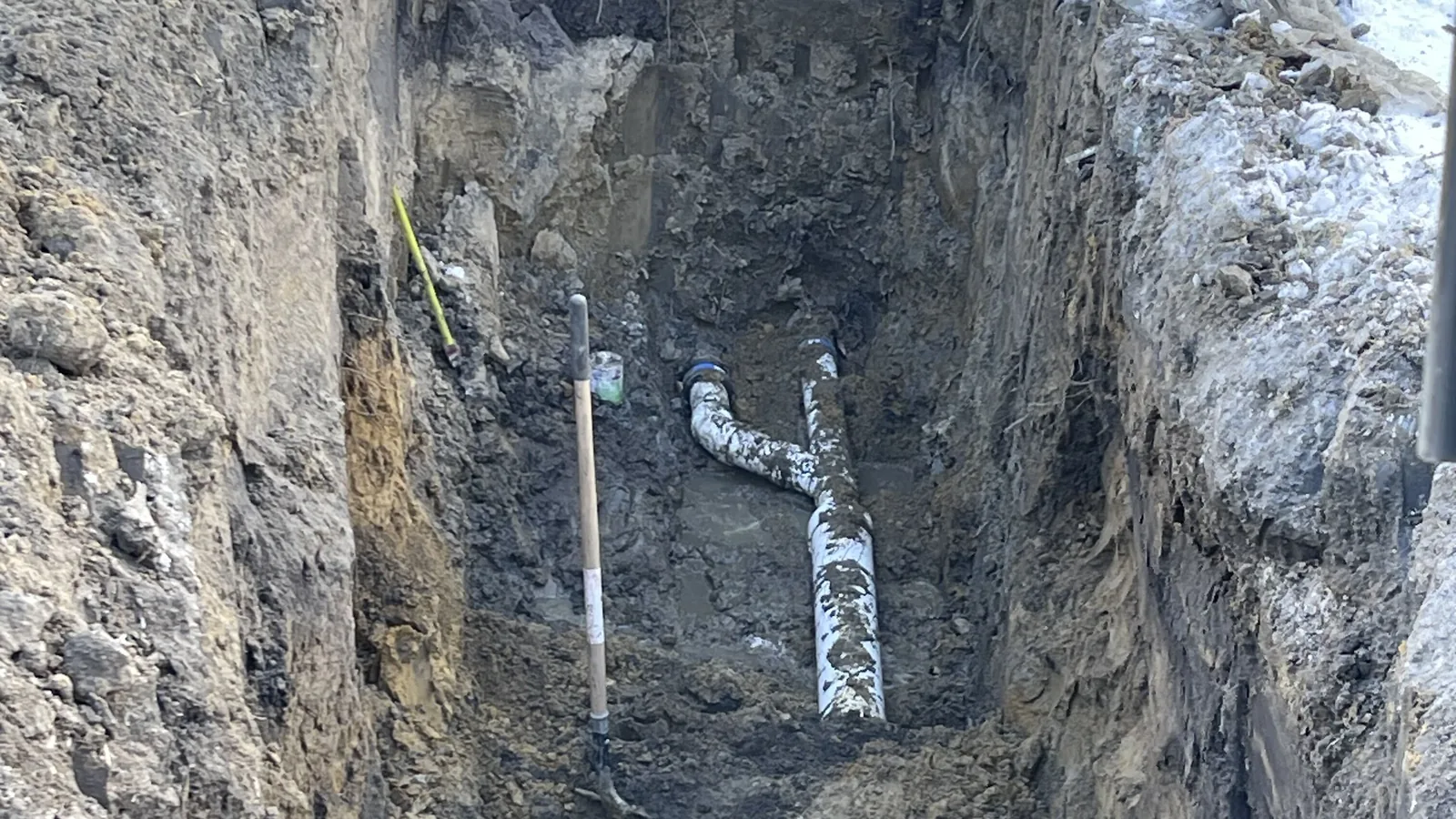
Every pool starts as a hole, and the hole has its own costs. Depth and machine access drive the price of excavation and site work. Every load of dug soil also has to go somewhere.
Before any dig, we call MISS DIG 811 for locates. State law requires that notice at least 72 hours ahead, and nonbusiness days do not count. Private lines, like a feed to a shed or a sprinkler system, are not marked.
Lot rules also decide where the pool can sit. Macomb Township wants the water at least 10 feet from any building. It asks for 7.5 feet to a side lot line and 6 feet to the rear line.
The same township keeps pools 10 feet from overhead wires and 5 feet from buried electric service. Within 500 feet of a county drain, it also wants a soil erosion permit or a letter of exception.
Chesterfield Township’s numbers differ: 6 feet from any building and 3 feet from a side lot line. Your township sets the setbacks and the barrier details, and we build to them.
How long is the swim season in Michigan?
It is short. NOAA’s 1991 to 2020 normals for the Selfridge Air National Guard Base station put the June high at 78 degrees. The normal high reaches 82 in July and 80 in August. May sits at 68 and September at 73.
A heater can stretch the season into May and September. Macomb Township adds a mechanical permit when a pool heater goes in. One guide also lists a yearly winterizing service in cold climates. We set coping and waterline tile with Michigan freeze-thaw cycles in mind.
What do the barrier and electrical rules add?
Your township or city building department sets the pool rules and issues the permits. Macomb Township’s pool sheet, revised in April 2024, is a clear example. It requires a building permit and an electrical permit for any pool holding 24 inches of water or more.
The barrier must be at least 4 feet tall. Gates swing away from the pool and close and lock on their own, with latches 54 inches above grade. Doors that open straight to the pool need an alarm that sounds when they open. The fence also takes its own permit.
The township’s wiring rules call for ground-fault protection on outlets near the pool. The pool’s metal parts are tied together with solid copper wire, and that bonding grid gets its own inspection. The township also requires a $1,000 bond for an inground pool before the permit is picked up.
On our builds, the steel, the shell, the plumbing and the electrical rough-in are completed and inspected before backfill. Read your own township’s pool sheet before you sign a contract.
How long does it take to build a gunite pool?
Most residential inground pools take about 8 to 12 weeks from permit approval to water. Design and the permit come first, so plan ahead for a summer swim. A build runs in five steps.
- Design: the shape, size, depth and finish.
- Excavation: the dig, with the dug soil hauled off and the yard protected.
- The shell: steel reinforcement first, then gunite or shotcrete. The plumbing and electrical rough-in go in at this stage.
- Coping and waterline tile, then the deck and the plaster or pebble finish.
- Equipment and start-up: the filter, pump, heater and sanitizer are installed, balanced and tested.
Before we leave, we walk you through how the equipment runs. When you compare quotes, check which of these steps each one covers.
How does gunite compare with vinyl liner and fiberglass over time?
The price to build is only the start. Guides also add up what each type costs to keep. These figures come from three national cost guides.
| Pool type | Upkeep over 10 years | The big repeat job |
|---|---|---|
| Gunite or shotcrete | $27,000 to $40,000 | Resurfacing every 10 to 15 years, about $2,500 to $13,000 |
| Fiberglass | $5,000 to $15,000 | Resurfacing, $3,500 to $10,000 |
| Vinyl liner | $11,000 to $17,000 | A new liner every 7 to 8 years, $965 to $4,025 |
Gunite costs the most to keep up. In return, the shell is shaped to your yard, from a simple rectangle to a freeform design. One guide says a concrete pool can last 30 years or more with a good build and good care. When one comes due, we handle replastering, tile repair, new coping and equipment upgrades.
How do you get a real number for your yard?
Online ranges set a ballpark. Your number depends on your yard and the pool you want. We look at the site and put the quote in writing.
We build inground pools for homeowners across Macomb County and Metro Detroit. See the full build on our gunite pool construction page. Call (877) 633-5773 for a free on-site estimate.