Commercial Sidewalks and ADA Ramps Around Macomb County
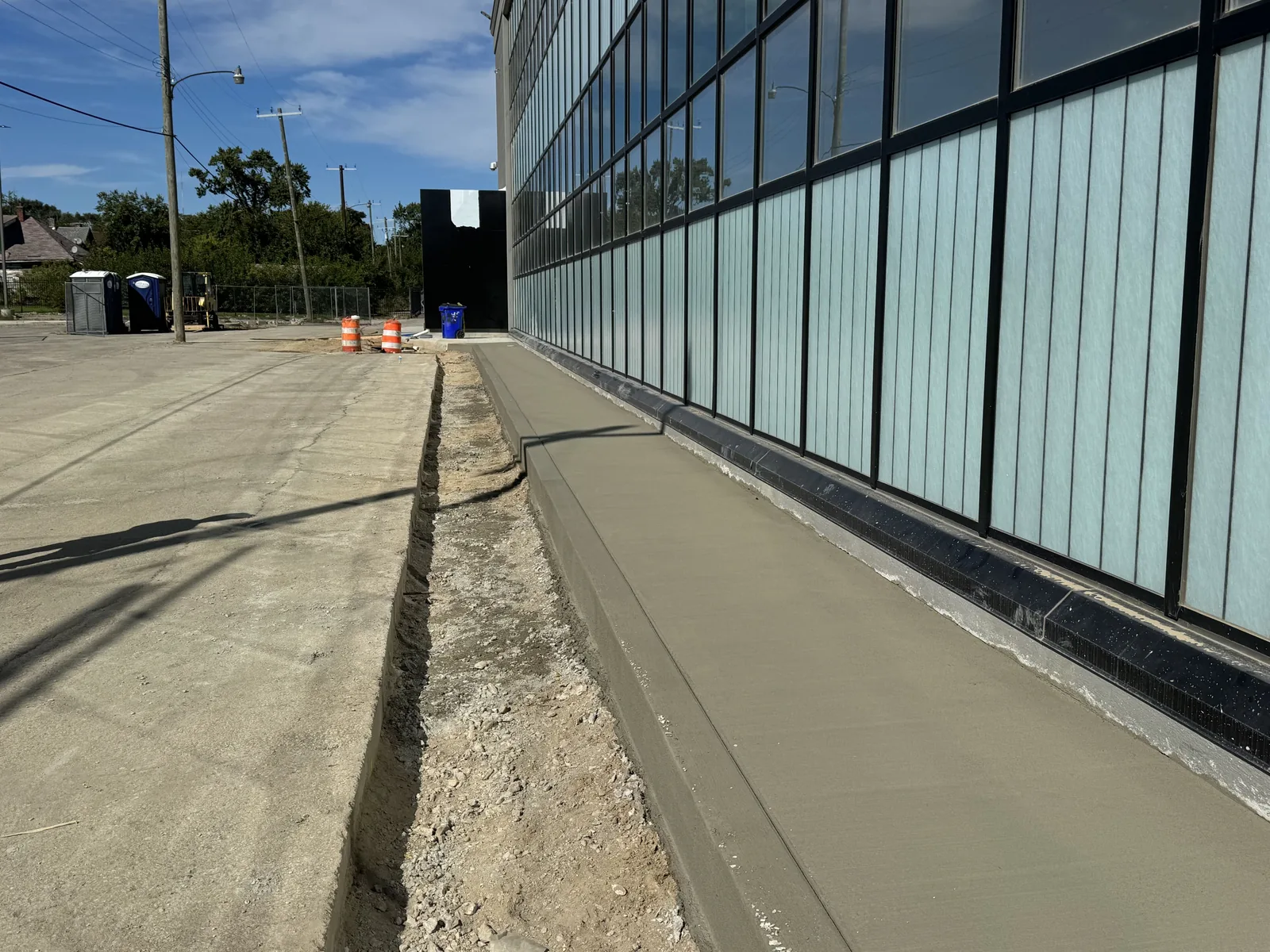
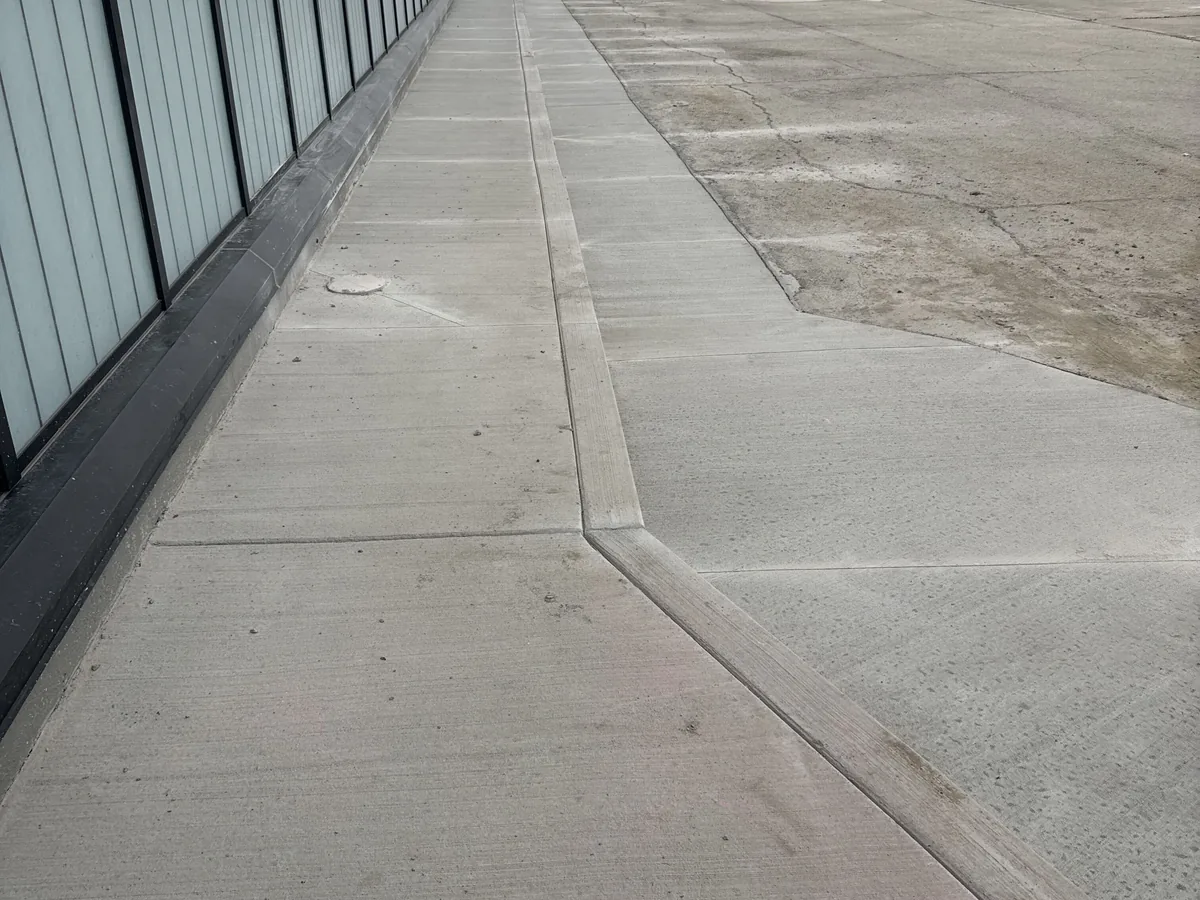
Sidewalks and curb and gutter frame the front of most commercial sites. Curb and gutter carries rain and snowmelt along the edge of a lot to the catch basins and storm drains. Concrete industry guidance says scaling, the flaking of a finished surface, often shows up in gutters and sidewalks. Those are the spots where plowed snow keeps the surface wet for long periods.
The federal ADA standards set the shape of a curb ramp on an accessible route. They cap the running slope at 1:12 and the cross slope at 1:48. The ramp needs at least 36 inches of clear width, plus a top landing at least 36 inches long. We form and pour to the grades on your plans, and your architect or engineer confirms what applies.
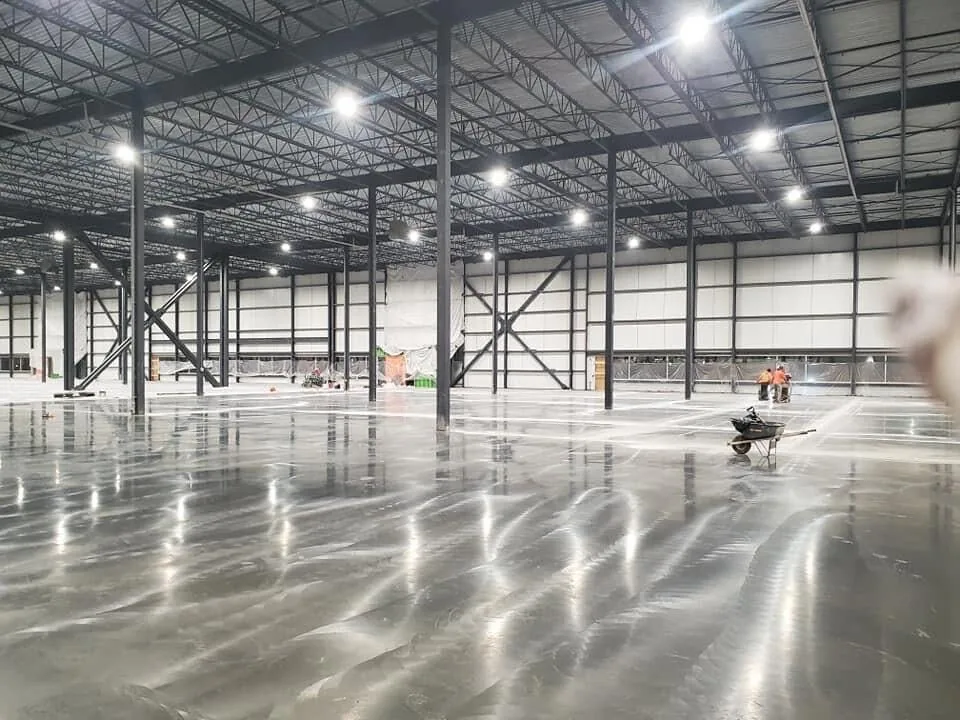
Concrete Flatwork for Loading Docks and Warehouse Floors
A loading dock carries loaded trucks, and a warehouse floor carries forklifts and racking. When the job has plans or an engineer's spec, we pour to its slab thickness and steel. Forms are set to exact grade, and rebar or wire mesh goes in based on the load. Dumpster pads and their aprons take the weight of the container and the truck that empties it.
NOAA's Selfridge station in Harrison Township averages about 129 days a year with lows at or below freezing. The state concrete association's driveway and sidewalk guidelines call for air-entrained concrete of at least 4,000 psi. For a drive that carries delivery vehicles, they call for at least 5 inches of concrete. We match the mix design to the exposure and the load.
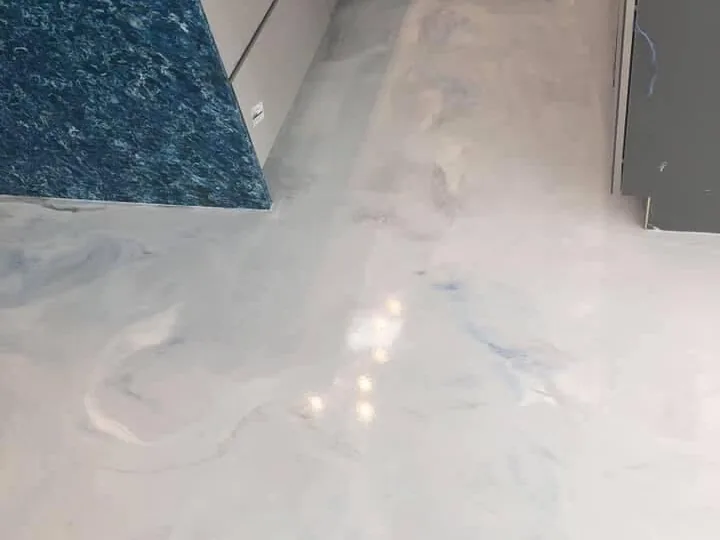
Indoors, the slab is the base for whatever finish goes on it. When a shop or warehouse wants a polished or coated surface, we also do polished concrete and epoxy floors.
How Do We Pour Commercial Concrete Around a Working Business?
A business usually needs its doors and drives open while the work goes on. We phase the pours, so part of the site stays in use while a new section cures. The state concrete association's guidelines open new concrete to traffic after 7 days of curing. Testing can clear it sooner, once the concrete reaches 2,500 psi.
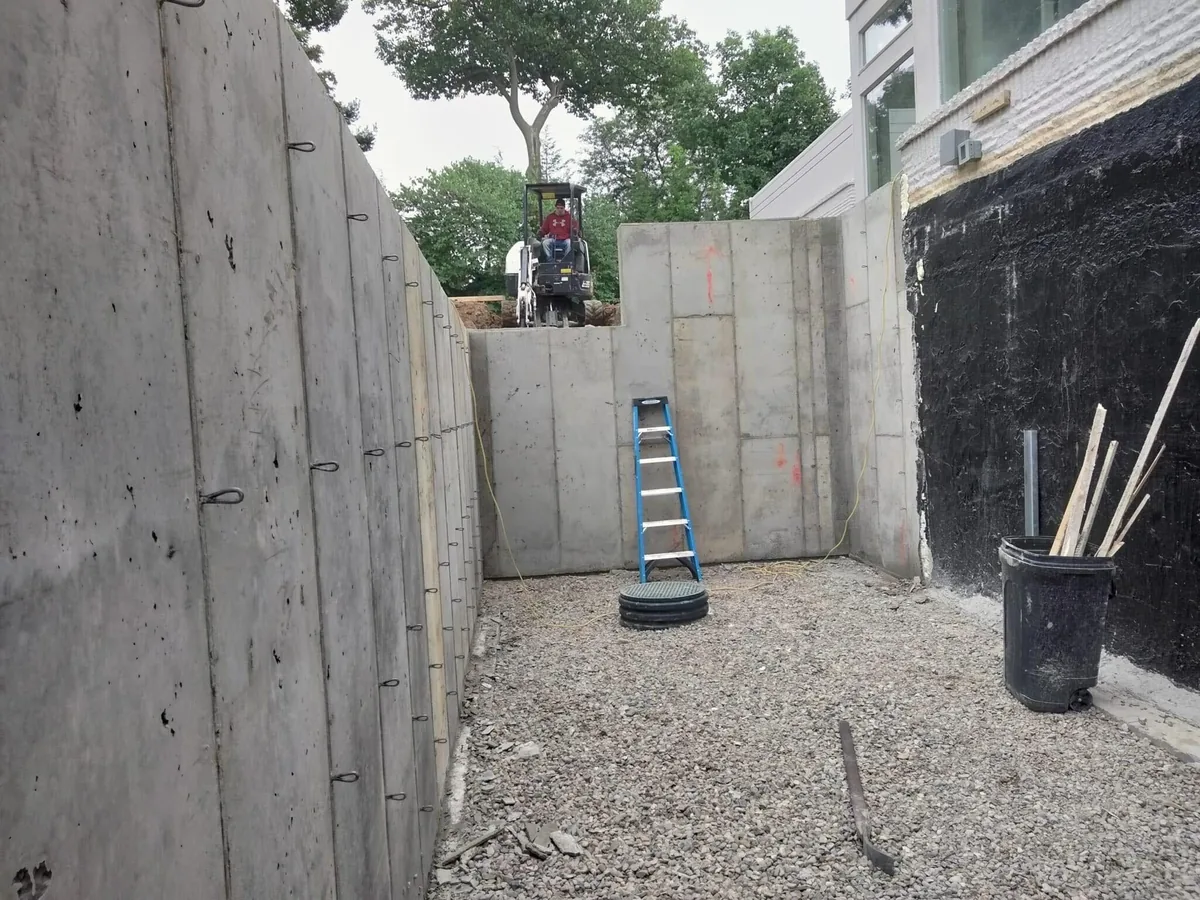
Before we dig out a sub-base, we call MISS DIG 811. The state's one-call system asks for at least three business days of notice. Private lines that a utility did not install go unmarked, so we check the site for them too.
New concrete needs care its first winter. The state concrete association says to skip deicing chemicals that winter and use sand for traction. It also says never to use fertilizer as a deicer. Sealer goes on only after proper cure time.