Why do basements leak in Macomb County?
Much of Macomb County sits on wet, heavy ground. USDA soil survey data rates most of the county as very limited for homes with basements. The main reason it lists is saturated soil close to the surface.
Lenawee, one of the county's most common soils, is clay-rich ground left by old lakes. Its USDA description says water often stands on it from November to May.
Heavy clay and a high water table both build water pressure against a basement wall. Building codes typically call for waterproofing where that pressure can occur. Dampproofing covers walls where that pressure will not occur.
How exterior basement waterproofing works
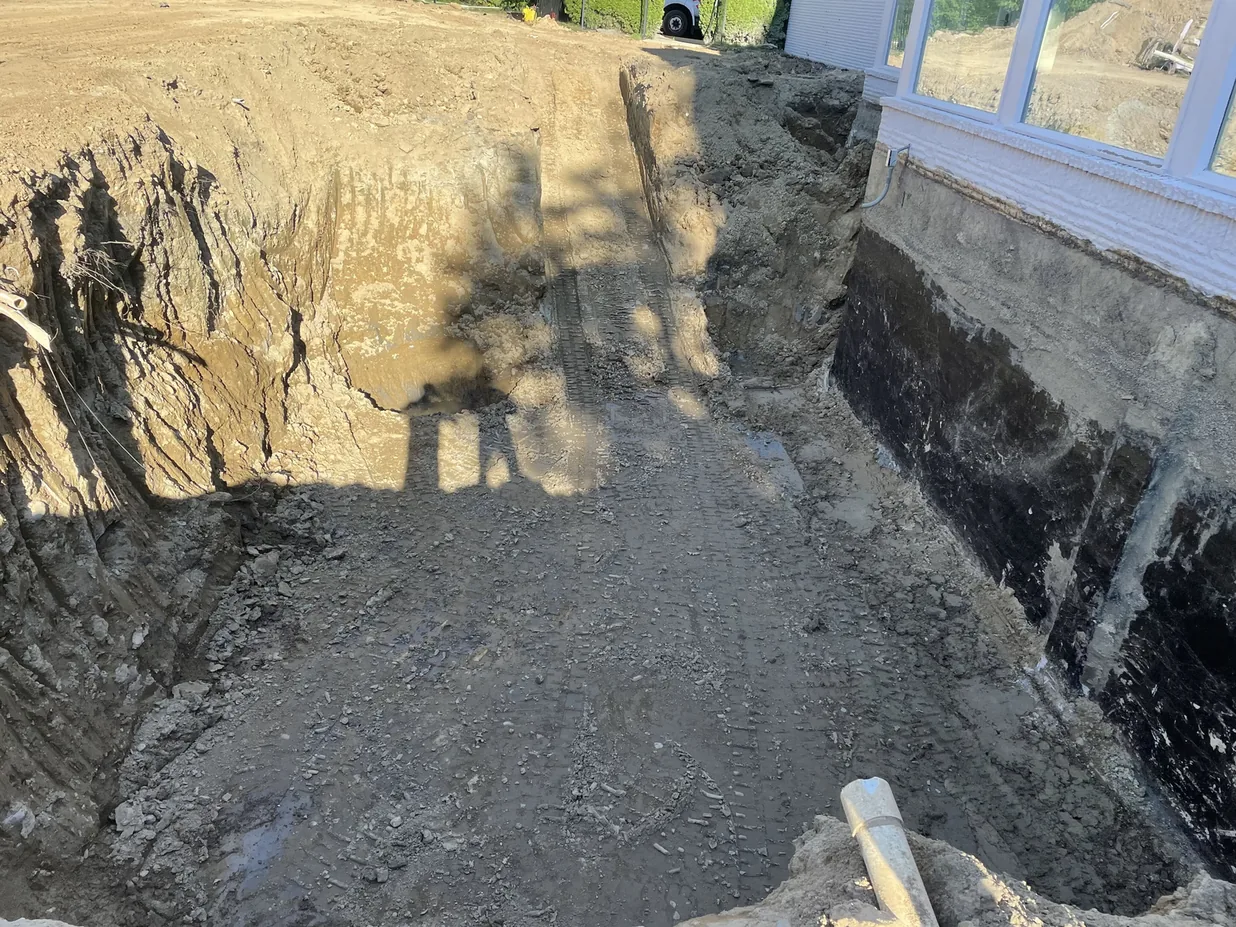
Every dig starts with a call to MISS DIG 811, so buried utility lines get marked. Then we excavate along the wall down to the footing. With the wall open, cracks get repaired before anything covers them.
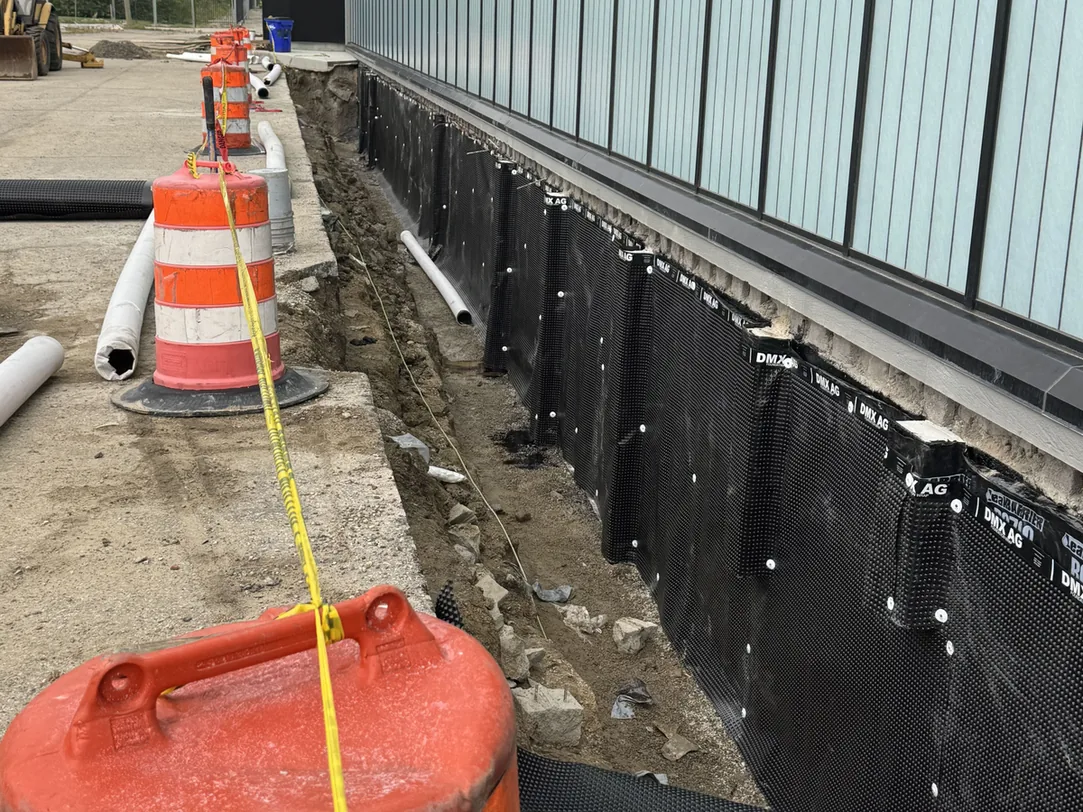
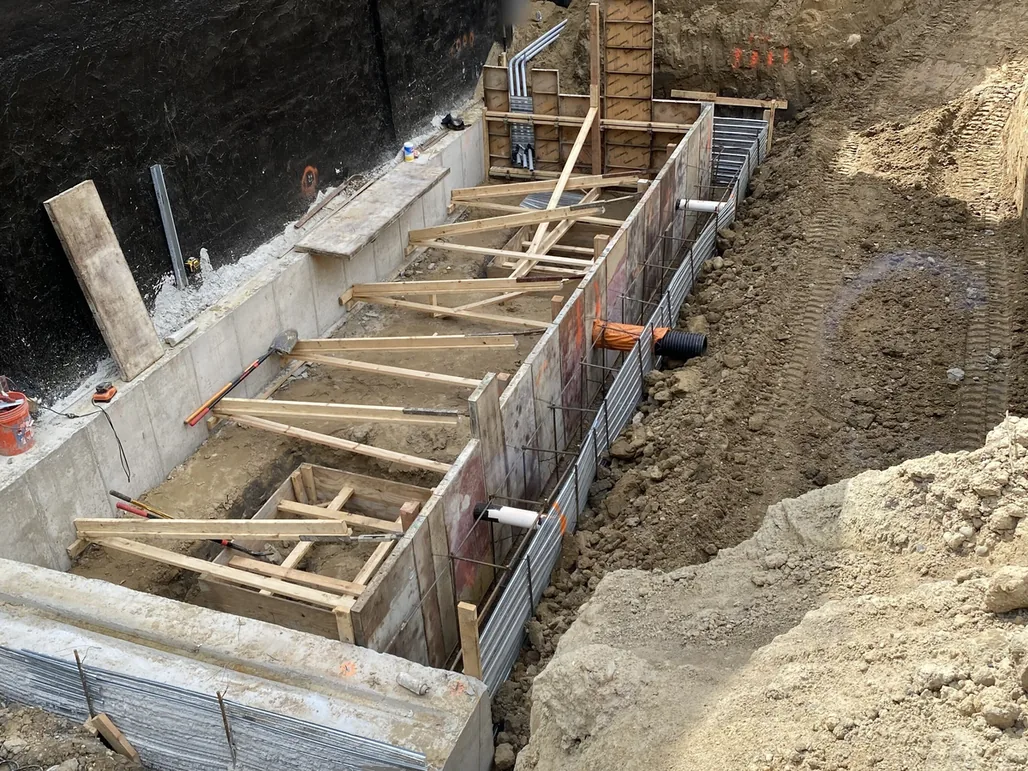
Next, a liquid or sheet membrane goes on the wall. Dimple board goes over the membrane and gives water a path down to the footing. There, footing drain tile carries it to an outlet, such as a storm sewer or lower ground. When that outlet needs a new line, our storm drain and catch basin work covers it.
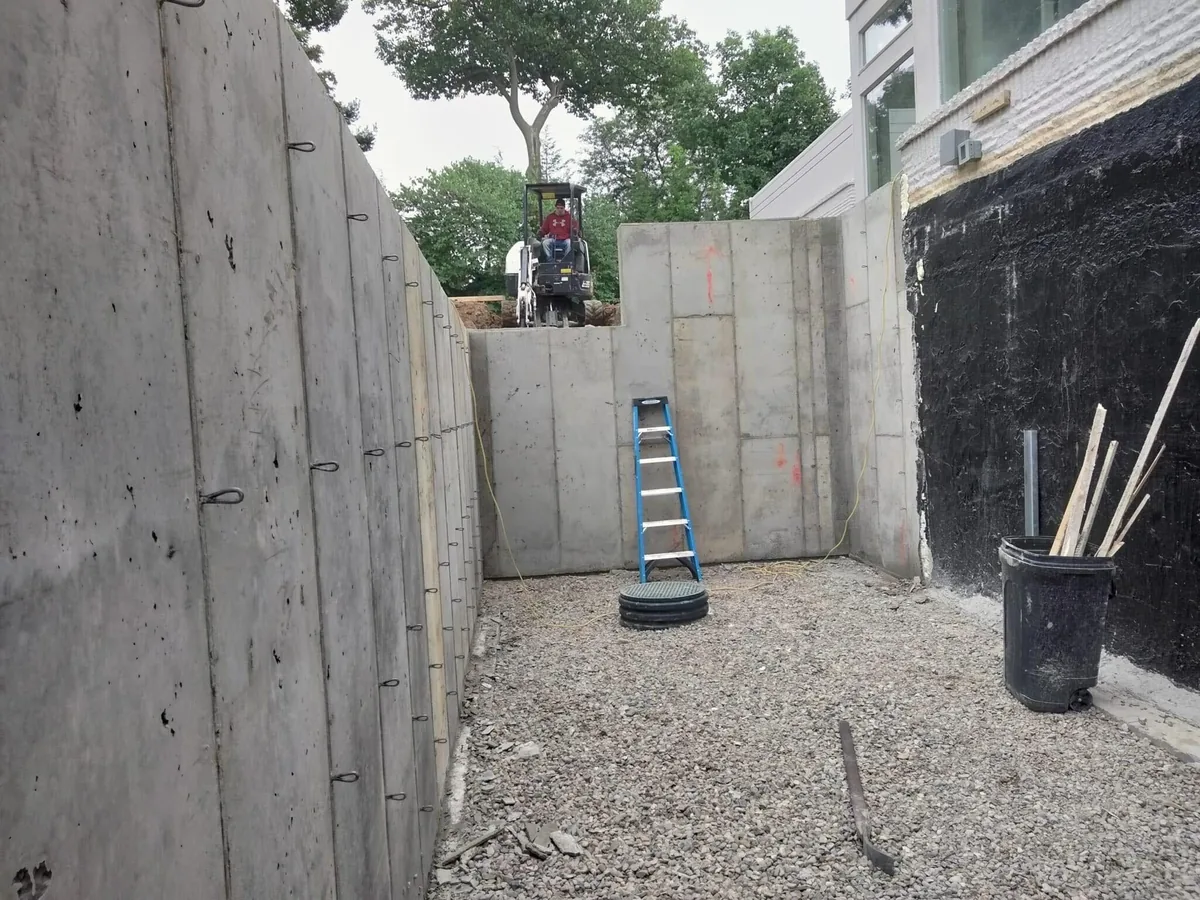
We backfill in lifts and compact each one, then shape the grade so water runs away from the house. Masonry industry guidance calls for a drop of at least 6 inches in the first 10 feet. Last, we restore the lawn and any concrete or asphalt we disturbed.
Foundation crack repair from the outside of the wall
A crack in a basement wall is a path for water. With the wall dug open, we repair it from the outside, where the water gets in. The membrane then covers the repair along with the rest of the wall.
Some cracks point to a bigger problem. A home inspectors' association links horizontal cracks to saturated soil that pushes a wall inward. A bowing wall or a long horizontal crack is a question for a structural engineer first.